Another Round of Strikes on London Underground Looms
Four days in the week likely to see some impact from industrial action
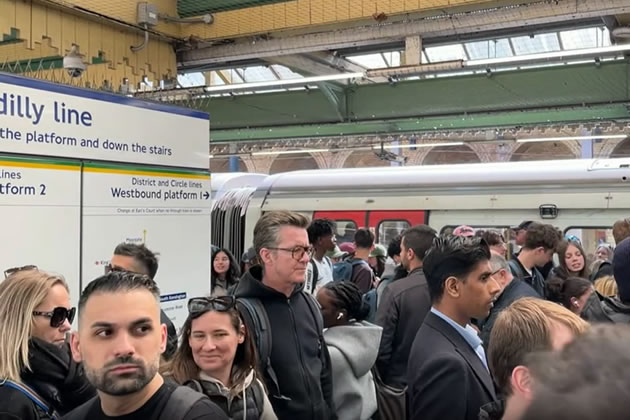
Most lines were disrupted with some suspended completely during the earlier strikes
May 14, 2026
Following the April round of industrial action on the London Underground now over, attention is turning to whether further strikes planned for May and June can still be avoided. At present, there is little sign of a breakthrough in the dispute between the RMT union and Transport for London, and the remaining walkouts are still expected to go ahead.
London endured four days of disruption during the April strikes, which took place from midday on 21 April to the morning of 22 April, and again from midday on 23 April to the morning of 24 April. While some services continued to operate, several lines were either completely suspended or heavily reduced during the action. The Piccadilly, Circle and Waterloo & City lines were among the worst affected, with TfL warning passengers to expect disruption well into the following mornings.
During the April strike action, the lines that maintained the highest level of service were generally the Jubilee, Northern, Victoria and parts of the District and Hammersmith & City lines, although all operated on reduced timetables and experienced overcrowding and delays. TfL was able to keep partial services running because not all Tube drivers were participating in the strike, with members of the ASLEF union continuing to work.
Outside the Underground itself, the best alternatives were the Elizabeth line, London Overground and Docklands Light Railway, all of which continued running normally throughout the strikes, albeit much busier than usual.
The strikes were designed to maximise disruption while limiting the number of days workers spent on strike. On the strike days themselves, services tailed off throughout the afternoon and evening, with many lines finishing early. The following mornings saw no Tube services before around 7.30am on parts of the network, followed by overcrowding and delays as services gradually recovered.
Although London Underground managed to run roughly a third of normal services during parts of the disruption, the knock-on effects spread across the wider transport network. The Elizabeth line, Overground, DLR and buses experienced significantly heavier demand, while commuters increasingly turned to cycling andworking from home.
The dispute remains centred on TfL’s proposed voluntary four-day working week for Tube drivers. TfL says the scheme would modernise working practices, bring the Underground closer to other rail operators and offer staff greater flexibility without increasing contractual hours. The RMT, however, argues that the compressed schedule would lengthen shifts, worsen fatigue and create safety concerns.
The disagreement has also exposed divisions within the rail unions themselves. ASLEF, which represents a slight majority of Tube drivers, has broadly backed the proposals, arguing they could give drivers up to 35 additional days off per year. The RMT has remained opposed and insists TfL is attempting to impose changes without sufficient negotiation.
There had briefly been hopes of a settlement earlier in the year when the RMT suspended planned March strikes following progress in talks. However, negotiations subsequently stalled, leading to the April action and the scheduling of further strikes later this spring and summer.
Business groups continue to warn that repeated Tube disruption is harming London’s hospitality and night-time economy, particularly in central London where restaurants, theatres and bars rely heavily on evening footfall. However, some analysts believe the impact of Tube strikes has diminished compared with previous years as more commuters adapt through hybrid working and alternative transport.
Unless negotiations resume in earnest, Londoners should currently expect further strike action on 19–20 May, 21–22 May, 16–17 June and 18–19 June. TfL has advised passengers to check before travelling during those periods and prepare for reduced services, station closures and delayed starts on the mornings after each walkout.
Claire Mann, TfL's Chief Operating Officer, said, "We have been clear that our proposals for a four-day week are designed to improve work-life balance and are entirely voluntary. Any Tube driver who doesn’t wish to opt in to the new, four-day working pattern and associated changes to working arrangements can remain on a five-day working pattern. We have also said many times in discussions that we believe the majority of the issues that have been raised would be resolved with more detailed work.
"A significant number of drivers have indicated that they want us to progress plans for the pilot of this new working pattern on the Bakerloo line, and it would deliver benefits both for our colleagues and our customers. We urge the RMT to work with us so we can resolve this dispute. In the meantime, we are asking customers to check before they travel and allow plenty of extra time for their journeys."
Like Reading Articles Like This? Help Us Produce More This site remains committed to providing local community news and public interest journalism. Articles such as the one above are integral to what we do. We aim to feature as much as possible on local societies, charities based in the area, fundraising efforts by residents, community-based initiatives and even helping people find missing pets. We've always done that and won't be changing, in fact we'd like to do more. However, the readership that these stories generates is often below that needed to cover the cost of producing them. Our financial resources are limited and the local media environment is intensely competitive so there is a constraint on what we can do. We are therefore asking our readers to consider offering financial support to these efforts. Any money given will help support community and public interest news and the expansion of our coverage in this area. A suggested monthly payment is £8 but we would be grateful for any amount for instance if you think this site offers the equivalent value of a subscription to a daily printed newspaper you may wish to consider £20 per month. If neither of these amounts is suitable for you then contact info@neighbournet.com and we can set up an alternative. All payments are made through a secure web site. One-off donations are also appreciated. Choose The Amount You Wish To Contribute. If you do support us in this way we'd be interested to hear what kind of articles you would like to see more of on the site – send your suggestions to the editor. For businesses we offer the chance to be a corporate sponsor of community content on the site. For £30 plus VAT per month you will be the designated sponsor of at least one article a month with your logo appearing if supplied. If there is a specific community group or initiative you'd like to support we can make sure your sponsorship is featured on related content for a one off payment of £50 plus VAT. All payments are made through a secure web site. |